
Several common structural forms of glass curtain walls
As a widely used enclosure structure and decorative form in modern architecture, glass curtain walls have various structural forms and can be classified according to construction methods, supporting structures, and installation processes. The following are several common forms of glass curtain wall structures and their characteristics analysis:
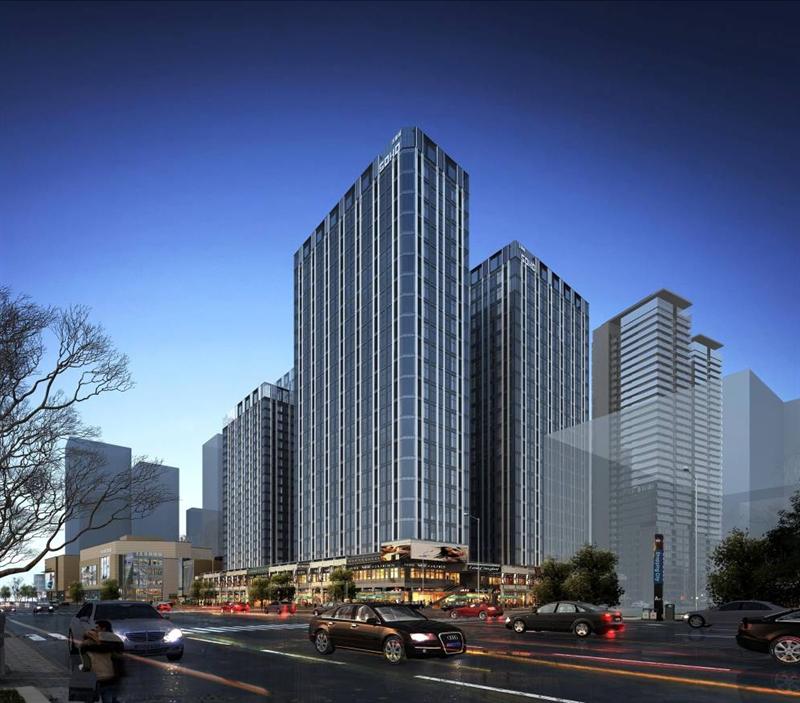
1、 Frame supported glass curtain wall
The frame supported glass curtain wall is one of the most widely used types in which glass panels are fixed by metal frames (such as aluminum alloy). According to the degree of exposure of the framework, it can be further subdivided into:
exposed frame supported glass curtain wall
Construction: The glass panel is embedded in an aluminum alloy frame, and the vertical and horizontal components of the frame are exposed on the outside.
Features: The appearance presents a regular grid like pattern, with a clear and visible metal frame, giving people a sense of stability and unity. Suitable for buildings that pursue traditional aesthetics or require a strong sense of structure.
Application: Commercial complexes, office buildings, etc.
Concealed frame glass curtain wall
Construction: The glass panel is completely fixed inside the aluminum alloy frame with structural adhesive, and there is no exposed metal frame on the appearance.
Features: The visual effect is simple and transparent, with the glass and frame integrated into one, creating a light and modern atmosphere. Hidden frame curtain walls are divided into fully hidden frames and semi hidden frames (vertically hidden and horizontally visible or vertically visible and horizontally hidden).
Application: High end office buildings, cultural venues, etc.
Half hidden frame glass curtain wall
Construction: Part of the frame is exposed (such as hidden vertical bars and exposed horizontal bars), and the glass is bonded to the frame through structural adhesive.
Features: Balancing the regularity of visible frames and the transparency of hidden frames, suitable for buildings that require a certain degree of decoration.
Applications: hotels, convention centers, etc.
2、 Point supported glass curtain wall (point type glass curtain wall)
The point supported glass curtain wall uses metal connectors (such as connecting claws) to fix the glass panel to the supporting structure, creating a frameless transparent effect. According to the form of supporting structure, it can be divided into:
Steel structure point support
Construction: Supported by steel structures (such as steel columns and beams), glass is fixed by connecting claws.
Features: Flexible structure, capable of achieving large-span design, transparent and modern visual effects.
Application: Large public buildings (such as airports, stations), commercial spaces.
Cable pole structure point support
Construction: Stainless steel tie rods or cables are used as the supporting structure, and the glass is fixed by connecting pieces.
Features: Combining flexibility and rigidity, suitable for curved or irregular buildings, with high construction accuracy requirements.
Application: Art venues, landmark buildings.
Glass rib point support
Construction: Using glass ribs (vertical glass panels) as the supporting structure, the glass panels are fixed by metal connectors.
Features: Full glass design, wide field of view, but high cost.
Application: High end commercial spaces, landscape architecture.
3、 Full glass curtain wall
The full glass curtain wall consists of glass ribs and glass panels, with no exposed metal frame, creating a visually transparent overall effect. According to the installation method, it can be divided into:
Hanging full glass curtain wall
Construction: The glass panel is suspended by an upper lifting device, with glass ribs serving as the supporting structure.
Features: Suitable for spaces with high heights and large spans, such as atriums and shared halls.
Application: Shopping centers, hotel lobbies.
Seat type full glass curtain wall
Construction: The bottom of the glass panel is fixed on the ground base, and the glass ribs are vertically supported.
Features: Easy to install, but limited in height, suitable for low rise buildings.
Application: Shop, exhibition hall.
4、 Unit type glass curtain wall
The modular glass curtain wall is prefabricated in the factory, including glass, frame, sealing materials, etc., and transported as a whole to the site for installation. Its characteristics include:
High installation efficiency: Modular design shortens the construction period and is suitable for high-rise buildings.
Good sealing: The factory has high processing accuracy, reducing on-site errors.
Convenient maintenance: Unit modules can be independently replaced, reducing later costs.
Application: Super high-rise office buildings, residential buildings.
5、 Other special forms
Double layered glass curtain wall (breathing curtain wall)
Construction: Composed of two layers of glass curtain walls, one inside and one outside, with a ventilation cavity formed in the middle.
Features: Energy saving and environmentally friendly, regulating indoor temperature through air circulation to reduce energy consumption.
Application: Green buildings, ecological office buildings.
Intelligent glass facade
Construction: Integrated with smart materials such as photoelectric glass and dimming glass.
Features: It can achieve functions such as light transmittance adjustment and power generation, improving the level of building intelligence.
Applications: Technology parks, futuristic buildings.
Summary and selection suggestions
Pursuing transparency: Prioritize choosing hidden frames or point supported glass curtain walls.
Pay attention to structural safety: Frame supported or steel structure point supported curtain walls are more stable.
High rise buildings: Unit curtain wall installation has high efficiency and is suitable for projects with tight schedules.
Energy saving requirements: Double layered glass curtain walls or smart curtain walls can reduce energy consumption.
Budget constraint: The cost of the open frame curtain wall is relatively low, making it suitable for economical projects.
The selection of structural form for glass curtain walls should comprehensively consider building functions, aesthetic requirements, budget, and construction conditions. Reasonable design can achieve a balance between aesthetics and performance.


表单1
Name*
Remarks*