
Analysis of Safety Issues and Systematic Solutions for Glass Curtain Walls
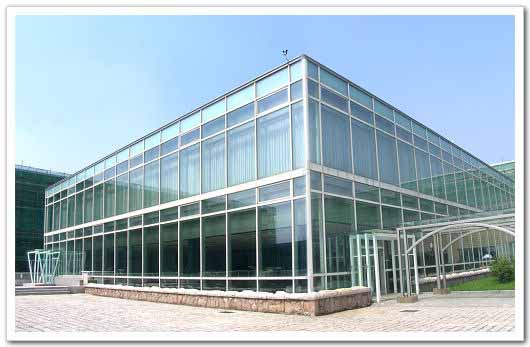
1、 Core security issues and their causes
Glass breakage and falling
Self explosion risk: The phase transition of nickel sulfide impurities in tempered glass causes volume expansion, leading to spontaneous explosion without external force (such as the case of a commercial building in Shenzhen).
External impact: Glass breakage caused by wind load, earthquake, or human collision (such as a project in Shandong where the breakage rate exceeded 30% during transportation due to inadequate edge polishing).
Installation defects: aging of structural adhesive (glass falling due to brittleness of silicone adhesive in Xiamen Lianban Building), failure of supporting structure (loose bolts in Guangzhou New China Building), and loosening of hardware components for opening fans (over 50% of hinged opening fans falling off).
Insufficient fire resistance performance
The glass curtain wall softens and melts when exposed to fire, resulting in low fire resistance integrity (the fire-resistant rock wool of Shanghai Global World Building becomes ineffective due to moisture, leading to a 50% decrease in fire resistance performance).
Light pollution and structural safety
Mirror reflection causes glare on surrounding roads (a landmark in a certain city was rectified due to excessive reflectivity);
Insufficient design of inter story displacement (early thin rod curtain walls could not meet the seismic lateral displacement requirements, resulting in glass breakage).
Lack of maintenance and management
The aging of curtain wall materials beyond the service period (caused by the aging of sealant in a building in Shenzhen, resulting in a short circuit in the elevator shaft), the lack of fire protection layer, and the ambiguity of the responsible parties (multiple building owners shirking responsibility).
2、 Systematic solution
1. Material and process upgrades
Glass selection:
Adopting laminated glass (adhesive film for self explosion fragments), homogeneous tempered glass (reducing the risk of nickel sulfide), and ultra white glass (reducing impurity content).
Example: Shanghai center Building uses a double-layer breathing curtain wall with Low-E coating to reduce the spontaneous explosion rate and improve energy saving performance.
Structural adhesive and sealant:
Select weather resistant silicone adhesive, conduct compatibility tests before construction, and control the injection environment (temperature ≤ 27 ℃, humidity ≥ 50%).
Strict monitoring during the maintenance period (the structural adhesive can only be moved after 14-21 days of curing, and a support plate is installed at the bottom of the hidden frame curtain wall to support the weight of the glass).
2. Design optimization and standardized execution
Fireproof design:
The gap between the curtain wall and the main structure is filled with fireproof insulation materials, with a fire resistance limit of ≥ 1 hour (such as the Chengdu Smart Ring project).
Set up protective facilities such as eaves and impact resistant canopies (fully concealed frame curtain walls are prohibited in densely populated areas).
Wind pressure resistance and displacement design:
The cross-sectional width of the curtain wall profile should be ≥ 65mm, with reserved interlayer displacement gaps (the specification requires a gap of ≥ 5mm between the glass and the bottom of the frame groove).
Example: The curtain wall of the Beijing Sub center Library uses an active sunshade device to reduce the risk of glass breakage caused by thermal stress.
3. Construction and Quality Control
Embedded parts and connectors:
Deviation control of embedded parts (elevation ≤ 10mm, position ≤ 20mm), and the use of expansion bolts for patching is strictly prohibited (as required by Shenyang Yuanda standard).
The connector adopts a three-dimensional adjustable structure, and the weld length meets the design requirements (corner code connection weld ≥ 100mm).
Edge processing:
After cutting the glass, mechanically grind the edges (grinding wheel mesh ≥ 180 mesh) to eliminate cutting cracks (the specification requires the edge chamfer width of the supporting curtain wall to be ≥ 1mm).
4. Maintenance and monitoring system
Regular inspection:
After one year of completion acceptance, a comprehensive inspection will be conducted, followed by an annual inspection every five years (for overdue curtain walls);
Focus on checking the status of structural adhesive, loose hardware components, and opening fan limit devices (such as the case of bolt tightening repair in Guangzhou New China Building).
Intelligent monitoring:
Deploy sensors to monitor glass stress and structural adhesive performance in real time (such as Sunglass robot bending furnace technology from Germany to improve the accuracy of hyperbolic glass processing).
Emergency management:
Establish a curtain wall information database and complete safety assessments within 24 hours after natural disasters (such as the special investigation of Shenzhen curtain walls after Typhoon Mangkhut).
5. Policy and Responsibility Implementation
Lifetime Design and Construction System:
Promote the "lifelong responsibility system", and design, construction, and supervision units shall sign responsibility commitment letters (as required by the national "Management Measures for Safety Maintenance of Existing Building Curtain Walls").
Owner's main responsibility:
A single owner building is maintained by the owner, while a multi owner building determines the responsible person through negotiation (such as the fire protection repair case of Shanghai Global World Building).
Regulatory strengthening:
Prohibit the use of glass curtain walls in residential buildings, schools, and hospitals with two or more floors (as required by the Ministry of Housing and Urban Rural Development);
Hold accountable for illegal projects in accordance with the law (such as a landmark being fined and required to rectify within a time limit due to excessive light pollution).
3、 Future trend: Technology driven security upgrades
Material Innovation:
The application of power glass (cadmium telluride component mass production efficiency exceeds 18%) and flexible glass (30 micron foldable glass) enhances safety and functionality.
Digital management:
BIM+IoT technology enables full lifecycle monitoring (Yuanda Aluminum's digital twin platform has a fault prediction accuracy of 92%).
Standard perfection:
China has taken the lead in formulating 2 international standards and 38 national standards, promoting the globalization of curtain wall technology output (such as the certification of China National Building Materials standards to help expand overseas markets).


表单1
Name*
Remarks*