
Unveiling the core technology of Liaoning's specialized insulated windows: multi-layer glass versus bridge-cut aluminum
In the extremely cold environment of Liaoning, where temperatures drop to minus 30 degrees Celsius, the insulation performance of a window directly determines indoor energy consumption and living comfort. How do the mainstream technical solutions on the market - multi-layer glass systems and bridge-cut aluminum profiles - work together to withstand the severe cold? This article provides an in-depth analysis of the principles and applicable scenarios of these two core technologies through laboratory data and practical cases from Liaoning.
1. Analysis of technical principles: two weapons against severe cold
1. Broken bridge aluminum profile: "blocker" of heat conduction
Core structure:
Using PA66 nylon insulation strips, the aluminum alloy profiles are divided into inner and outer parts, forming a "thermal bridge block"
Customization and optimization in Liaoning:
Increase the width of the insulation strip (≥34mm, while the conventional product only has a width of 24mm)
Adopting a multi-cavity design (≥5 independent chambers) to enhance thermal insulation
2. Multi-layer glass system: "filter" for thermal radiation
Technological evolution:
Single-layer glass → double-layer insulating glass → triple-layer double-cavity glass (mainstream in Liaoning) → vacuum laminated glass
Key parameter comparison:
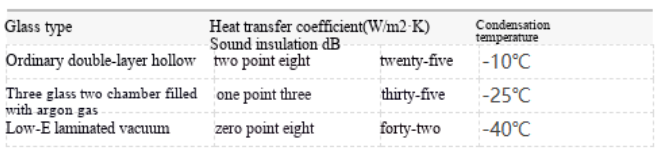
II. Performance Showdown in Extreme Environments in Liaoning 1. Actual Measurement of Anti-condensation Ability
Comparative experiment in a residential area in Shenyang (January 2023, outdoor temperature -28℃):
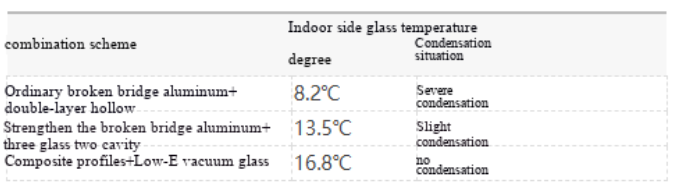
2. Long-term energy consumption comparison (taking a 120㎡ residence as an example)
| configuration scheme | Annual heating cost | 10-year total cost |
|---|---|---|
| Plastic steel + double-layer glass | 6200yuan | 6.2ten thousand yuan |
| Broken bridge aluminum + three-layer glass with two chambers | 3800yuan | 3.8ten thousand yuan |
| System window + vacuum laminated glass | 2800yuan | 2.8ten thousand yuan |
III. The golden rule of technology combination
1. Adaptation plans for different regions in Liaoning
Mountainous areas in eastern Liaoning (Huanren, Kuandian, etc.):
70 series bridge-cutoff aluminum + triple-glazed double-chamber with argon gas filling (K value ≤1.2)
Coastal cities (Dalian, Yingkou):
80 series bridge-cutoff aluminum + laminated Low-E glass (with a wind pressure resistance of Grade 9)
Shenyang metropolitan area:
Integrated window screen and bridge-cut aluminum + centrally positioned louver triple-glazed window (balancing insulation and ventilation)
2. The balance point between cost and performance
Economical type: 65 series bridge-cutoff aluminum +5+12A+5 double-layer hollow (with limited budget)
Balanced type: 75 series bridge-cut aluminum +5+12Ar+5+12Ar+5, triple-glazed double-chamber design (mainstream choice)
High-end type: multi-cavity composite profile + vacuum laminated glass (villa/passive house)
IV. Unique technology upgrading plan in Liaoning
1. Wind pressure resistance enhancement technology
Case Study of Dalian Xinghai Bay Project:
Using 6063-T6 aviation-grade aluminum and a multi-point locking system, it successfully withstood the 2022 Typhoon Muifa
2. Anti-salt spray corrosion treatment
Residential solution along Yingkou coast:
The surface of the profile is coated with fluorocarbon and sealed with EPDM sealing strips, achieving a salt spray resistance of up to 3000 hours
3. Intelligent heat preservation system
Shenyang Smart Community Application:
The temperature and humidity sensing automatic ventilation system, coupled with electric heating glass, achieves zero condensation in an environment at -30℃
V. Answers to Common Misunderstandings of Consumers
Q1: Is thicker bridge aluminum better?
Truth: The 70-80 series in Liaoning region offers the best cost-performance ratio, as overly thick profiles actually increase the area of cold bridges
Q2: Is triple-glazing necessarily better than double-glazing?
The key lies in the configuration: ordinary triple-glazing is inferior to the combination of "double-layer insulating glass + Low-E film"
Q3: Are imported brands more suitable for the north?
Data speaks: The wind pressure resistance design of Liaoning's local brands is more in line with the GB/T 8478-2020 standard
Conclusion:
Under the unique climatic conditions of Liaoning, the combination of bridge-cutoff aluminum and multi-layer glass is not a simple binary choice, but requires scientific combination based on the building orientation, floor height, and budget range. Consumers are advised to prioritize products certified by the "Technical Regulations for Building External Window Systems in Severe Cold Regions" (DB21/T 2973-2018), and request third-party testing reports to verify key indicators such as K value and air tightness.


表单1
Name*
Remarks*