
Roof Skylight and Roof Panel System
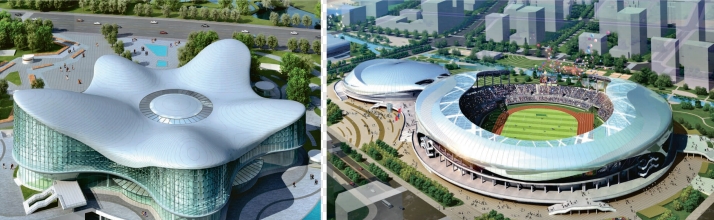
Definition: The transparent section of a roof is referred to as a skylight roof, typically constructed with glazing, polycarbonate panels, or membrane structures. Its structural forms include single-slope, double-slope, pyramidal, prismatic, arched, dome-shaped, and various other custom designs, with framing systems that can be exposed, semi-hidden, or hidden. These are suitable for applications such as hotel atriums, lobby areas, and other specialized daylighting canopies.
The opaque section of the roof generally consists of metal roof panels, made from materials such as profiled color steel sheets or aluminum-magnesium-manganese alloy panels. Where no thermal insulation or acoustic requirements exist, standard profiled color steel sheets are typically used. For large sports venues or cultural centers requiring insulation and soundproofing, a standing-seam roof system is employed. This system is characterized by absolutely reliable waterproof performance, high durability, and appropriate sound absorption and thermal insulation properties.
To ensure the quality of the roof system, materials must be selected to meet or exceed the following physical performance indicators:
| Performance Indicator | Fixed Part | Operable Part |
|---|---|---|
| Wind Load Resistance | Level V | — |
| Water Tightness | 1600 Pa | 350 Pa |
| Air Permeability (m³/m·h) | ≤ 0.01 | ≤ 0.5 |
| Thermal Insulation (U-value, W/m²·K) | ≤ 2.0 | — |
| Sound Insulation (Rw, dB) | ≥ 35 | — |
| Impact Resistance (N·m/s) | ≥ 210 | — |
| Out-of-Plane Deformation Capacity | 1/150 | — |


表单1
Name*
Remarks*